
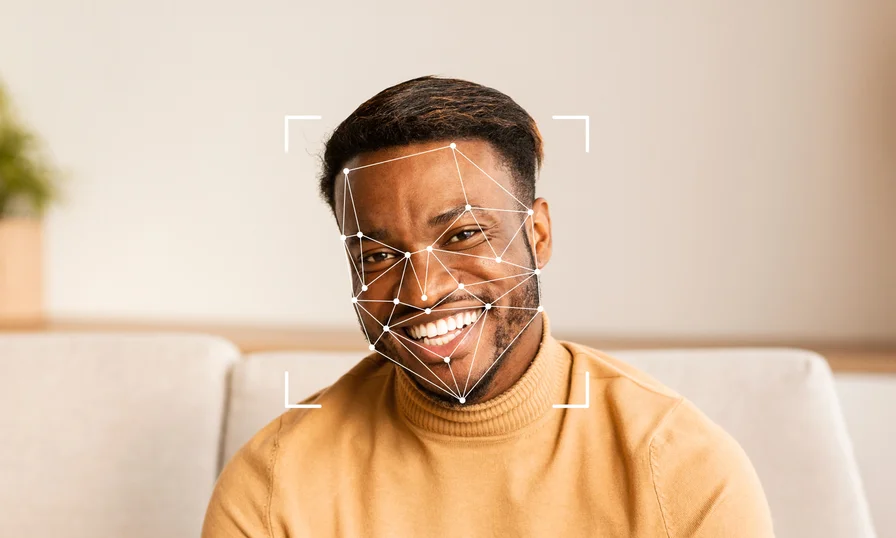
Fighting Fakes: How Liveness Detection Prevents Spoofing in Age Verification
Age verification is no longer “just a checkbox.” It is increasingly a regulated control point—one that has to be both effective and defensible under audit, enforcement, and public scrutiny.
Liveness detection is now closely tied to user accounts on digital platforms, ensuring that only legitimate users can access their accounts and helping to prevent identity theft.
That shift creates an obvious incentive for abuse: if your platform gates pornography, gambling, age-rated communities, purchases of restricted goods, or other adult-only features, then bypassing the age check becomes the fastest path to prohibited access. Fraudsters know this, and they are adapting—moving from simple photo tricks to deepfakes and even more technical injection-style attacks that target the verification pipeline itself. Liveness detection plays a critical role in authentication systems by verifying that the biometric data comes from a live person, preventing unauthorized access and enhancing consumer protection.
Overall, liveness detection helps minimize fraudulent activities, protects valuable assets, and maintains the integrity of online systems.
Why age verification is being attacked now
The biggest driver is regulatory pressure: governments and regulators are increasingly explicit that self-declared ages (or “enter your date of birth”) are not an acceptable safeguard for high-risk content and services. Age verification laws are being enacted across various jurisdictions, affecting websites and operating systems by mandating user age verification to comply with legal requirements.
In the United Kingdom, for example, Ofcom has communicated that pornography services must have “strong” / “highly effective” age checks, with a compliance milestone tied to July 2025, under the online safety regime. Similar guidance stresses that age assurance should be robust against circumvention techniques that are realistically accessible to children—because “it will be more vulnerable” if it isn’t. However, these laws can have unintended consequences, such as disproportionately affecting marginalized communities, including people without IDs, communities of color, and individuals with disabilities, and can lead to increased surveillance and loss of anonymity online.
Elsewhere, the direction of travel is similar, even if the mechanics differ:
- The European Union is actively working on an EU-level approach to age verification to support implementation of its platform regulation ecosystem, and has published an “age-verification blueprint” positioned as privacy-preserving and interoperable with future EU Digital Identity Wallets. These laws apply to a wide range of websites and even operating systems, requiring compliance from platform providers.
- Australia has moved forward with “Age-Restricted Material Codes” and related rules aimed at limiting children’s exposure to pornography and other adult content—paired with expectations around “age checks” and enforcement. These legal requirements extend to websites and operating systems, impacting how platforms implement age verification.
- France has increased pressure through its media regulator, Arcom, including formal notices related to protecting under-18s from pornography, alongside ongoing court-backed enforcement dynamics. The law covers both websites and operating systems, mandating robust age verification measures.
When you combine that regulatory trajectory with the rising availability of synthetic media and AI-enabled fraud tooling, you get a predictable outcome: more frequent, more sophisticated attempts to beat age checks. Public-sector bodies now routinely warn that generative AI is being used to scale deception and fraud, including via deepfake-like media.
How spoofing breaks weak selfie-based checks
A “selfie check” that only confirms a face is visible is not the same thing as verifying a live human being is present. That gap is exactly where spoofing lives. Biometric literature and standards typically describe these as presentation attacks—attempts to fool biometric capture by presenting an artefact (photo, screen, mask, etc.) rather than a live person. A liveness check is a critical step in the identity verification process, ensuring that the biometric data comes from a live person and not a fake representation.
The most common spoofing methods against face-based age checks map cleanly to what face presentation-attack research has documented for years:
Photo attacks (print or display). The attacker presents a printed face or an on-screen image to the camera. This persists because it is cheap, fast, and easy to source (social media images, profile pictures, screenshots).
Replay attacks (pre-recorded video). A recorded video of a real person is played back to the camera, so the “face” appears to move. Research notes this is more challenging to detect than photos because facial dynamics (e.g., blinking and movements) are included—at least superficially.
Deepfakes and synthetic media. In modern contexts, a “replay” may not be a genuine recording at all. Deepfake tooling can generate synthetic faces or manipulated videos that look realistic enough to slip past naïve controls; European cybersecurity guidance explicitly treats deepfakes as an attack instrument in remote identity proofing contexts, including presentation scenarios where a deepfake is replayed through a screen. Liveness detection work involves a variety of methods and technologies to discern live biometric data from fraudulent attempts, helping to ensure the authenticity of the identity verification process.
3D mask attacks. Masks can imitate facial geometry, creating a harder problem than flat media. While typically less common (cost, complexity), mask attacks are a known category in the PAD literature and are directly relevant for higher-risk workflows.
Injection-style attacks (tampered camera input). This is the escalation many teams miss. Instead of holding something up to the camera, an attacker can attempt to replace the video stream or feed manipulated imagery via “virtual camera” paths or other tampering methods—meaning the app sees “camera input” that did not originate from a live capture session.
These are not academic edge cases. Regulators explicitly call out the practical risk: a child could upload a photo of an adult or use still images to pass facial age estimation unless the system has anti-spoofing protections—liveness detection is singled out as a way to add confidence that the user is present “at the time the check is carried out.” Integrating liveness detection into identity verification processes helps prevent biometric spoofing and unauthorized access.
What liveness detection actually checks
Liveness detection (often discussed under the standards term presentation attack detection, PAD) is the capability that decides whether the biometric sample was captured from a real, present human—rather than from a photo, video, mask, or similar artefact. Liveness detection is essential for ensuring the security of biometric authentication systems.
Two details matter for Trust & Safety and compliance stakeholders:
First, liveness is not a “nice enhancement” to a selfie flow; it is a direct control against circumvention. In UK-facing age assurance guidance, liveness detection is described as a way to prevent attackers from using static images (print attacks) or pre-recorded videos (replay attacks) to trick systems—particularly in facial age estimation contexts. Liveness detection significantly strengthens the overall security posture of authentication systems by verifying the authenticity of biometric data in real-time.
Second, liveness is a risk-reduction layer, not a standalone guarantee. Strong age verification is usually a process: it may combine age estimation, step-up checks, and robust controls against spoofing and repeated bypass attempts. Regulators assess not only what method you chose, but whether it is “highly effective,” tested, and resilient to circumvention in realistic conditions.
Liveness detection can be applied across various biometric modalities, such as facial recognition, fingerprint scanning, and iris recognition.
Active and passive liveness detection
Modern liveness systems generally fall into two families—often implemented together to balance security with conversion.
Active liveness detection (challenge–response). Active liveness detection requires the user to perform a specific gesture, such as blinking, turning their head, following a dot, or speaking a phrase, to verify their identity. In standards and evaluation language, this is “user interaction required” PAD: it creates a live challenge the attacker must satisfy in real time.
Active liveness detection can be powerful in high-risk situations, but it has real product costs: accessibility friction, higher drop-off, and a larger attack surface for “challenge imitation” if the system’s challenge design is weak or predictable. It is also considered less user-friendly and can be vulnerable to spoofing attacks using masks or deepfakes.
Passive liveness (non-interactive). The system analyzes captured imagery without asking the user to do anything special. In practice, that often means evaluating subtle signals across the face region, the capture session’s temporal structure, and artefacts that distinguish real skin and 3D structure from printed/displayed media. Passive liveness detection uses artificial intelligence algorithms to detect imposters without the user's knowledge.
A practical—and regulator-aligned—design pattern is: keep the default flow low-friction (often passive), then add step-up measures when risk indicators appear (unusual device context, suspicious session properties, repeated failures, borderline age estimates, etc.). This aligns with the idea that age assurance should be both effective and “easy to use,” without unduly excluding legitimate adults.
Liveness detection can be implemented as either active (requiring user action) or passive (transparent analysis), often using machine learning.
How AI catches fakes before they pass the gate
To understand why “just a selfie” is fragile—and why modern liveness is stronger—it helps to look at what anti-spoofing models actually measure. Face liveness detection is a biometric security measure used in face recognition systems to distinguish real faces from spoofed images, ensuring that only live users can access secure systems. Liveness detection employs a variety of methods and technologies to discern live biometric data from fraudulent attempts. In addition to analyzing facial features such as muscle movements and unique expressions, these systems often use texture analysis to examine the surface quality and fine details of facial images, helping to detect spoofing attempts. Spoofing attacks can include the use of high-resolution photos, video replays, and 3D-printed masks to trick the system. Deepfake detection aims to identify AI-generated synthetic media that lacks human physiological nuances, further strengthening security. Voice recognition can also be used for liveness detection by analyzing vocal features and live interaction prompts to confirm user identity. Injection attacks involve fraudsters bypassing the camera by injecting a fake video feed into the system, posing another challenge for robust liveness detection.
Texture, micro-texture, and physiological cues
Printed photos and screens frequently fail to reproduce the fine-grained properties of real skin under varied lighting, focus, and motion. Academic surveys describe a broad ecosystem of software- and hardware-based PAD approaches, including methods that examine reflectance patterns, focus variation, and texture differences. Texture analysis, in particular, examines the surface quality and fine details of facial features to distinguish real faces from spoofing methods.
Some security guidance goes further, highlighting “micro-movements” of skin (for example pulsation-like signals) as part of advanced analysis, precisely because they are difficult to convincingly synthesize in a replay or print artefact. Analysis of facial features, such as muscle movements and expressions, is also used to authenticate identities and assess unique facial characteristics.
Depth and 3D structure signals
A face is inherently 3D; a printed photo is not. That is why depth cues—whether inferred from monocular video or supported by depth-capable sensors—are commonly referenced defenses against photo-based spoofing.
This is also why 3D mask attacks are treated as a higher class of threat: masks can approximate 3D geometry, which pushes liveness systems to rely on additional cues (surface properties, movement realism, and multi-frame consistency).
Temporal consistency across frames
Replay attacks are harder than photo attacks because they contain motion. But that motion is often too consistent (a flat screen moving as a rigid plane), contains display artefacts, or fails to match the natural temporal patterns of a live capture session. Research literature explicitly links replay attacks to emulated dynamics and highlights why countermeasures must address both appearance and time-based properties.
The hard problem: presentation attack detection and injection attacks
Many liveness deployments primarily target presentation attacks—artefacts shown to a camera. But modern threat modeling must include digital injection, where manipulated imagery is fed into the pipeline as if it were camera output (for example via virtual camera paths).
The reason this matters is simple: a system that only checks “does this look like a real face?” can be bypassed if the attacker can control what the app receives as “camera frames.” That is why serious liveness architectures increasingly treat capture integrity and session binding as first-class concerns, not optional hardening.
Measuring performance in a way compliance teams can defend
For compliance-aware teams, accuracy claims must translate into measurable risk. In PAD evaluation methodology, a core trade-off is between:
- Blocking attacks (security), and
- Not rejecting legitimate users (usability / fairness / conversion).
Formal metrics (commonly referenced via ISO-aligned definitions) are designed to quantify those two sides; NIST’s PAD evaluation reporting discusses this directly as a threshold trade-off that impacts both security and user inconvenience.
If your vendors or internal models cannot explain their decision thresholds, error rates, and testing conditions, you will struggle to justify that your age gate is “highly effective”—especially when regulators emphasize robustness, periodic review, and resilience against easy circumvention.
Compliance and privacy without killing user experience
A compliant age verification program is not only about stopping minors—it is about being able to demonstrate that you used proportionate, privacy-aware, and effective controls. Age verification systems can create privacy risks and privacy violations by requiring users to upload sensitive personal information, which increases the risk of data breaches and misuse. It is crucial that individuals maintain control over their own privacy during age verification processes, and privacy-preserving solutions like zero-knowledge proofs should be considered to allow age verification without compromising personal privacy. Additionally, facial recognition technologies used in age verification may misclassify individuals from certain racial backgrounds as underage, raising further concerns about fairness and accuracy.
What regulators are increasingly asking for
In the UK, government-facing explainer material spells out that online safety enforcement includes meaningful penalties (including large fines tied to revenue) and that age assurance guidance exists specifically to prevent children encountering pornography. Ofcom’s own guidance reinforces that age assurance must be robust in real conditions and must mitigate circumvention techniques that are realistically accessible to children.
In Europe, the European Commission has positioned an age-verification blueprint as a way for users to prove they are over 18 for adult-restricted content without revealing other personal information, and as interoperable with future European Digital Identity Wallets. Supporting material on EU digital identity architecture also emphasizes selective disclosure—confirming an age threshold without revealing a full birthdate.
In Australia, eSafety Commissioner describes an enforcement framework focused on restricting children’s access to pornography and other high-impact adult material, with age checks embedded in industry codes and regulator oversight.
Privacy-first is not optional—especially with biometrics
Age verification touches sensitive data. If your flow uses facial biometrics for unique identification, UK GDPR guidance treats that as special category biometric data; importantly, UK regulators also clarify that not all biometric data is automatically “special category”—it depends on use (e.g., unique identification).
Regulators explicitly point implementers to privacy principles like data minimisation, storage limitation, security, and accountability; they also highlight DPIAs as a concrete way to show “data protection by design” in high-risk processing.
In the UK online safety context, Ofcom also flags a duty to have regard to privacy when implementing child-safety measures, and notes that privacy concerns may be referred to the Information Commissioner's Office.
A recent US signal on “age verification with guardrails”
In February 2026, the Federal Trade Commission issued a COPPA-related policy statement intended to incentivize age verification mechanisms—while emphasizing guardrails such as using the data only for age verification, deleting it promptly, applying reasonable security, and providing clear notice.
Even if your platform is not US-focused, the compliance lesson generalizes: regulators are increasingly willing to accept age verification when it is privacy-bounded—purpose-limited, retention-limited, and auditable.
Free speech and age verification: balancing safety and rights
The rise of age verification systems has brought the challenge of balancing the imperative to protect children with the fundamental right to free speech. As online spaces become more regulated, particularly those hosting sensitive or age-restricted content, the debate intensifies: how can platforms restrict access to harmful material without overreaching and stifling legitimate expression?
Proponents of mandatory age verification argue that robust controls are essential to protect children from exposure to inappropriate or harmful content. This is especially relevant as more jurisdictions introduce age verification mandates for social media platforms, adult sites, and other online services. However, critics caution that these systems—especially those relying on biometric verification and facial recognition systems—can pose risks to users’ privacy and potentially chill free speech if not carefully designed.
The Supreme Court has weighed in on this balance, emphasizing that age verification mandates must be narrowly tailored to achieve their protective purpose without unnecessarily infringing on free speech. In practice, this means age verification systems should restrict access only where necessary, and avoid collecting or storing more data than required.
Modern solutions, such as passive liveness detection, offer a way forward. By verifying a user’s age and presence without requiring intrusive steps or explicit consent for every interaction, these systems can help platforms meet regulatory requirements while minimizing privacy risks. When implemented thoughtfully, age verification can protect children and restrict access to age-inappropriate content, all while respecting users’ rights to free expression and privacy.
Ultimately, the key is to design age verification systems that are proportionate, effective, and privacy-conscious—ensuring that the goal of protecting children does not come at the expense of users’ autonomy or the open nature of the internet.
Age verification system implementation: from pilot to production
Successfully deploying age verification systems requires a structured approach that moves from careful piloting to robust, secure production environments. The journey begins with pilot testing, where organizations evaluate the system’s ability to accurately verify users’ ages and detect various presentation attacks, including deep fakes and other fraudulent activities. This phase is critical for identifying vulnerabilities and refining algorithms to ensure both security and usability.
Once the pilot demonstrates that the age verification system can reliably restrict access to age-restricted content and protect sensitive information, the next step is production deployment. Here, security becomes paramount: implementing strong encryption, secure data storage, and rigorous access controls is essential to protect users’ data and maintain trust.
Modern age verification systems increasingly leverage machine learning and deep learning algorithms to enhance their ability to detect sophisticated threats, such as deep fakes and other forms of presentation attacks. These technologies enable systems to adapt to evolving risks, continuously improving their accuracy and resilience against fraudulent activities.
Flexibility is also crucial. As regulations, user expectations, and attack methods evolve, age verification systems must be designed for easy updates and ongoing improvement. This adaptability ensures that platforms can continue to verify users’ ages effectively, restrict access where appropriate, and protect both users and their own compliance posture.
By following a methodical implementation process—grounded in security, accuracy, and respect for users’ rights—organizations can deploy age verification systems that not only meet regulatory requirements but also foster safer, more trustworthy online environments.
How Agemin helps platforms prevent age verification fraud
For platforms that need low-friction age assurance while resisting spoofing, the product question becomes: can you combine (1) fast user flows, (2) strong anti-spoofing controls, and (3) privacy-first data handling in a way that stands up to regulators and attackers?
Companies across industries such as gaming, finance, and insurance use liveness detection to minimize fraud and protect user data. Liveness detection can also improve customer service by verifying customers' identities and ensuring that only legitimate users are granted access to their accounts.
Agemin positions its product stack around exactly that balance:
- AI-driven facial age estimation from a live selfie, explicitly framed as “privacy-first” and designed to avoid high-friction steps like document upload for many flows.
- Built-in liveness detection to raise assurance that the face input is from a present user, not a static image or replay.
- Secures against account takeovers and prevents financial loss, especially in finance where liveness detection stops fraudsters from using stolen biometric information to access accounts.
- Anti-spoofing and anti-deepfake capabilities described as available via SDK/API (positioned as defenses against synthetic and manipulated inputs).
- Privacy and compliance defaults—including documentation guidance asserting that “no personal data is stored by default,” alongside common implementation practices like user notice, backend-only API key handling, and audit reference IDs.
- An explicit “model performance & compliance” posture, framed as publishing performance metrics to support client obligations such as transparency and record-keeping in regulated environments.
From a product-design perspective, this maps well to how regulators describe “effective and usable” age assurance: deploy strong checks where needed, mitigate spoofing and circumvention, and keep accessibility and interoperability in view so legitimate adults are not blocked by a burdensome process.
Conclusion
If your age verification relies on face capture, then liveness detection is the control that separates “a face-shaped input” from “a live human being, present right now.” Age verification systems are used to restrict access to content classified as inappropriate for users under a specific age, making the accurate verification of a person's age or user's age central to these systems. Regulators are increasingly explicit that platforms must prevent easy circumvention—especially when children can realistically access the tricks.
However, age verification laws can limit children's access and kids' access to essential information, including health and educational resources, which can negatively impact young people. These systems often rely on biometric scans, which can be discriminatory and exclude certain populations. Parental consent requirements can also exclude or harm vulnerable youth, such as LGBTQ+ or foster children, as parents play a significant role in granting or denying access. Additionally, credit card fraud is a risk in age verification systems where stolen or misused credit card information is exploited. The implementation of age verification laws can affect community engagement and the ability of websites to foster open discussion, while also leading to increased surveillance and loss of anonymity online.
The practical takeaway for Trust & Safety, compliance, and product teams is straightforward: treat spoofing as a first-order requirement, not a future hardening task. Make liveness (and, where relevant, capture integrity) part of the core design; measure it with defensible metrics; and implement it with strict privacy boundaries.
Want to learn more?
Explore our other articles and stay up to date with the latest in age verification and compliance.
Browse all articles